

If you're reading this with a sore shoulder and a dog that treats every walk like the start of a sled race, you're in good company. Leash pulling is one of the most common issues dog owners bring to trainers, and the good news is that it's also one of the most fixable — with the right approach and the right dog walking equipment.
In many training sessions, the pattern looks the same: an eager dog, a frustrated owner, and a leash that's doing more restraining than guiding. This guide walks you through why dogs pull, exactly how to teach loose leash walking, and how choosing the right harness and leash set can support — not replace — the training process.
Why Dogs Pull on the Leash
Before you can fix pulling, it helps to understand why it happens in the first place. Dogs don't pull to be stubborn or dominant — they pull because it works, and because walking at a slow human pace doesn't come naturally to them.
- Instinct and excitement: The world outside is full of smells, sounds, and movement. A dog's nose and ears are pulling them forward long before their leash does.
- Opposition reflex: When a collar or harness puts pressure on a dog's body, many dogs instinctively lean into that pressure rather than away from it.
- Reinforcement history: If pulling has ever gotten your dog closer to something they wanted — another dog, a squirrel, the front door — that behavior has already been rewarded, sometimes hundreds of times.
- Lack of leash training: Many dogs simply were never taught what loose leash walking feels like. Nobody showed them the alternative.
- Under-exercised energy: A dog with pent-up energy is far more likely to charge ahead than one who's had a chance to burn off some steam first.
Professional trainers generally recommend addressing all four of these factors together — training technique, equipment, consistency, and exercise — rather than expecting one fix to solve everything on its own.
Common Mistakes Dog Owners Make
Most leash pulling struggles have less to do with the dog and more to do with a few small, fixable habits. Here are the ones that show up again and again.
- Letting the dog lead the pace. If your dog is always a step ahead, they're practicing pulling on every single walk.
- Using a flat collar for a strong puller. Constant pressure on the neck can be uncomfortable and even risky for dogs prone to tracheal sensitivity.
- Inconsistent rules. Allowing pulling on some walks (in a hurry) but correcting it on others confuses your dog about what's expected.
- Yanking the leash instead of stopping. A sharp correction can startle a dog without teaching them what to do instead.
- Skipping short training sessions. Trying to "fix" pulling only on long walks, instead of short focused practice sessions.
- Using the wrong size harness. A poorly fitted adjustable dog harness can shift, rub, or give a dog just enough wiggle room to keep pulling.
How to Teach Loose Leash Walking
Loose leash walking means your dog walks beside or near you with slack in the leash, rather than dragging you forward. It doesn't require a rigid heel position — just a dog who checks in with you and matches your pace.
The core mechanic professional trainers use is simple: forward motion is the reward. When the leash is loose, the walk continues. The moment it goes tight, the walk pauses. Over time, most dogs improve when they learn that a tight leash makes the world stop moving, and a loose leash keeps it going.
Training Tip
Practice in a low-distraction area first, like your backyard or a quiet hallway, before testing the skill on a busy sidewalk. Dogs generalize skills slowly — a dog who walks perfectly indoors may need to relearn the skill outside.
Why Positive Reinforcement Works
Positive reinforcement means rewarding the behavior you want to see more of — in this case, a loose leash and check-ins with you — rather than only correcting the behavior you don't want. When working with reactive dogs and easily excitable dogs alike, this approach tends to build trust faster and reduce leash-related anxiety.
Rewards don't need to be complicated. A small treat, a happy "yes," or simply continuing the walk can all mark the moment your dog gets it right. The key is timing — the reward needs to happen within a second or two of the correct behavior so your dog can connect the dots.
Most dogs improve when the walk itself becomes the reward, rather than something they have to fight through to get.
Step-by-Step Training Routine
This is the same basic framework used in many private and group training sessions to teach loose leash walking from scratch.
-
Fit the right equipment
Start with a well-fitted no pull harness and a standard 4–6 foot leash. Avoid retractable leashes during training — they encourage pulling by design.
-
Load up on reinforcement
Before you leave the house, practice a few rounds of "check in with me, get a treat" in a quiet room so your dog already has the habit fresh in mind.
-
Start walking, stop on tension
The instant the leash goes tight, stop walking completely. Wait for your dog to look back at you or release the tension, then reward and continue.
-
Reward the check-ins
Every time your dog glances at you or slows to match your pace, mark it with a treat or praise. This builds the habit of paying attention to you, not just the environment.
-
Add gentle direction changes
Turn a different direction whenever your dog starts to surge ahead. This keeps them engaged and prevents them from rehearsing the pulling motion.
-
Practice in short, frequent sessions
Five to ten focused minutes, several times a day, tends to produce faster results than one long walk where old habits take over.
-
Slowly increase distractions
Once your dog is reliable in a quiet space, practice near mild distractions, then busier ones, always going back a step if they struggle.
How Long Training Takes
Timelines vary by dog, but most owners see noticeable improvement within a few weeks of consistent practice. Here's a general training schedule used as a starting point in many sessions.
| Week | Focus | What to Expect |
|---|---|---|
| Week 1 | Equipment fitting & indoor practice | Dog learns the "stop on tension" pattern in a low-distraction space |
| Week 2 | Backyard & quiet street walks | Shorter bursts of pulling, more frequent check-ins |
| Week 3 | Neighborhood walks | Noticeably looser leash, occasional lapses near distractions |
| Week 4–6 | Busier environments | Consistent loose leash walking with occasional reminders |
| Ongoing | Maintenance | Continued reinforcement keeps the habit strong long term |
Puppies and newly adopted rescue dogs may take a little longer simply because they're also adjusting to a new routine. That's completely normal, and progress is rarely a straight line.
Choosing the Right Dog Harness and Leash Set
Training technique matters most, but equipment plays a real supporting role. A well-designed dog harness and leash set gives you better control and reduces strain on your dog's neck, which makes the training process smoother for both of you.
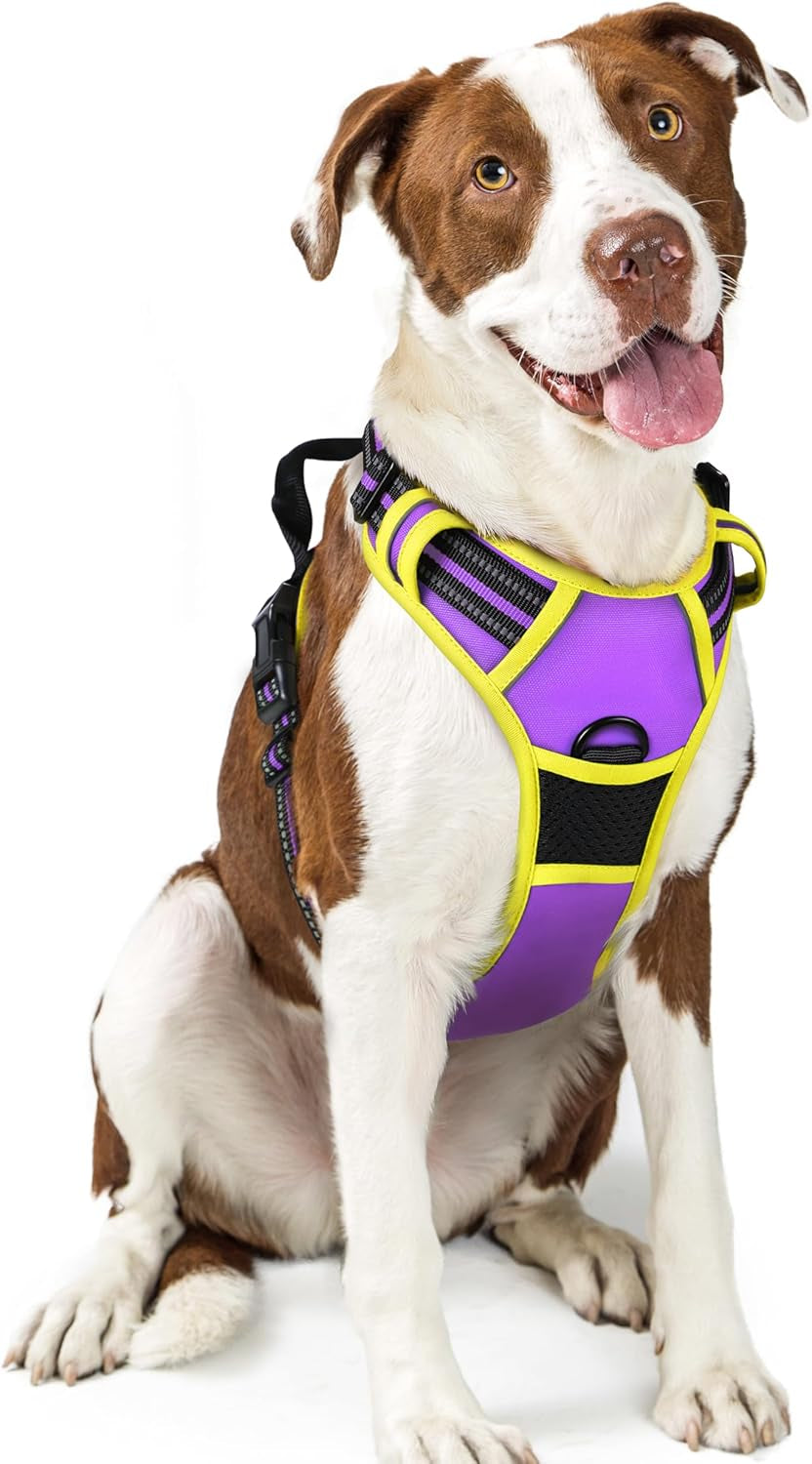
Here's what professional trainers generally look for in a good walking harness:
- Front-clip design. A front clip harness redirects a pulling dog back toward you instead of letting them drive forward with full force.
- Dual clip options. A harness with both a front and back leash attachment gives you flexibility between training walks and relaxed strolls.
- Padded, breathable material. Soft padding around the chest and belly prevents chafing, especially on longer walks.
- Fully adjustable straps. An adjustable dog harness should fit snugly without restricting shoulder movement.
- Reflective stitching. A reflective dog harness adds visibility for early morning or evening walks.
- Sturdy control handle. A top handle gives you quick control near traffic, other dogs, or crowded sidewalks.
Harness Feature Comparison
| Feature | Standard Collar | Back-Clip Harness | No Pull Front-Clip Harness |
|---|---|---|---|
| Neck pressure | High | None | None |
| Pulling control | Low | Low–Medium | High |
| Best for | Well-trained dogs | Casual walks | Active training & strong pullers |
| Reflective options | Sometimes | Sometimes | Often included |
Dog Size vs. Harness Recommendation
| Dog Size | Weight Range | Recommended Harness Type |
|---|---|---|
| Small | Under 20 lbs | Lightweight step-in or vest harness |
| Medium | 20–50 lbs | Adjustable dual-clip harness |
| Large | 50–90 lbs | Padded no pull harness with control handle |
| Extra Large | 90+ lbs | Heavy-duty padded harness with reinforced stitching |
If you're specifically searching for the best no pull dog harness for a strong or muscular breed, it's worth reading our complete no pull harness guide, along with our breed-specific reviews for pitbulls, German Shepherds, and Labradors.
Signs Your Current Harness Isn't Working
Sometimes leash struggles aren't about training at all — they're about gear that's fighting against you. Watch for these warning signs.
Warning Signs
- Your dog can back out of the harness or slip a leg through
- Red marks, rubbing, or matted fur under the straps
- The harness twists or rides up during walks
- You're constantly readjusting buckles mid-walk
- Your dog still pulls at full force despite consistent training
If any of these sound familiar, it may be time to compare options using a proper no pull harness comparison rather than assuming the training isn't working.
When to Replace Your Harness
Even a high-quality harness wears down over time. As a general guideline, consider replacing your dog walking harness if you notice fraying straps, cracked buckles, stretched-out padding, or if your dog has grown into a new size range. For dogs that walk daily, many owners find a well-made harness lasts twelve to eighteen months before it needs replacing.
Training Tips for Puppies
Puppy leash training is really about building positive associations before any pulling habits form.
- Let your puppy wear the harness indoors for short periods before the first walk.
- Keep early walks short — five to ten minutes is plenty at first.
- Use high-value treats generously; puppies respond fast to loose leash walking practice when it's fun.
- Avoid overwhelming environments until basic leash manners are established.
Puppy leash training tends to go smoothly when it starts before pulling ever becomes a rehearsed habit.
Training Tips for Adult Dogs
Adult dogs — especially rescues — can absolutely learn loose leash walking, even if pulling has been their normal for years. It just takes a bit more patience to replace an established habit.
- Expect a longer adjustment period than with puppies; that's normal, not a sign of failure.
- Use a well-fitted comfortable dog harness to immediately reduce pulling power while the new habit forms.
- Stay consistent across every walk, every family member, and every outing.
- Celebrate small wins — a few extra steps of loose leash is real progress.
Training Reactive Dogs
When working with reactive dogs, leash pulling is often tangled up with stress, not just excitement. The goal shifts from "walk nicely" to "stay calm enough to learn."
- Increase distance from triggers before working on leash manners.
- Use a secure, well-padded harness so a sudden lunge doesn't cause discomfort or a slip-out.
- Reward calm behavior heavily, even before pulling is fully resolved.
- Consider working with a certified professional trainer for more intensive reactivity cases.
Success Tip
In many training sessions with reactive dogs, progress comes from managing distance and rewarding calm attention — not from correcting the reaction itself.
Mistakes to Avoid
| Common Problem | Likely Cause | Solution |
|---|---|---|
| Dog lunges at other dogs | Under-socialized or reactive | Increase distance, reward calm focus |
| Dog pulls toward smells | High prey/scent drive | Use "stop on tension" method consistently |
| Harness rides up | Poor fit or wrong size | Re-measure and adjust straps |
| Progress stalls outdoors | Training only practiced indoors | Gradually increase real-world distractions |
| Dog ignores treats outside | Distractions outweigh reward value | Use higher-value treats during outdoor sessions |
Consistent, Short Sessions
- Practice daily in small bursts
- Reward every check-in
- Use the same cues every time
Inconsistent Corrections
- Yanking the leash sharply
- Allowing pulling "just this once"
- Skipping practice for weeks at a time
Ready for Calmer, Easier Walks?
A padded, adjustable no pull harness gives you the control to train confidently — without fighting the leash every step of the way.
Buy NowFrequently Asked Questions
How do I stop my dog from pulling on the leash?
The most effective method is the "stop on tension" technique: pause walking the moment the leash goes tight, then continue only once your dog releases the pressure. Pair this with a well-fitted no pull harness and frequent rewards for staying near you. Consistency matters more than any single trick — most dogs improve within a few weeks of daily short practice sessions, especially when every family member follows the same rules on every walk.
What is the best harness for a dog that pulls?
A front-clip, no pull harness is generally the best choice for dogs that pull, since it redirects forward motion back toward the handler instead of letting a dog drive ahead with full body weight. Look for adjustable straps, soft padding, and a sturdy control handle. Dual-clip designs offer the most flexibility, letting you use the front clip for training and the back clip for relaxed, already-trained walks.
Is a harness or collar better for leash training?
A harness is generally considered safer and more effective for leash training than a collar, especially for dogs that pull. Collars place pressure directly on the neck and trachea, which can be uncomfortable or risky over time. A well-fitted harness distributes pressure across the chest and shoulders instead, giving you better control while reducing strain, which makes it easier for your dog to learn loose leash walking comfortably.
How long does it take to train a dog to stop pulling?
Most dogs show noticeable improvement within two to four weeks of consistent, short daily training sessions, though full reliability around distractions can take a bit longer. Puppies and dogs without an established pulling habit often progress faster, while adult dogs or rescues with years of practice pulling may need extra patience. Progress isn't always linear — expect good days and harder days as the new habit becomes second nature.
Why does my dog pull more on some walks than others?
Pulling intensity often depends on your dog's energy level, the environment, and how many distractions are present. A dog with pent-up energy, or one walking somewhere new and exciting, is more likely to pull than on a familiar, quiet route. Weather, other animals, and even your own pace and mood can also influence how focused your dog is during a given walk.
Can puppies wear a no pull harness?
Yes, many no pull harnesses come in sizes suitable for puppies, though it's important to choose one that's lightweight and fully adjustable to accommodate quick growth. Introduce the harness gradually indoors before the first walk so your puppy has a positive association with wearing it. Puppy leash training focuses on building good habits early, so a comfortable, well-fitted harness sets the foundation for calmer walks later on.
What size harness does my dog need?
Harness sizing is typically based on your dog's chest girth and weight rather than breed alone. Measure around the widest part of your dog's ribcage and compare it to the brand's sizing chart. An adjustable dog harness with multiple strap points offers more flexibility for an accurate, comfortable fit. If your dog is between sizes or still growing, sizing up slightly with additional strap adjustment is usually the safer choice.
Are retractable leashes bad for leash training?
Retractable leashes are generally not recommended during leash training because they reward pulling by design — the more a dog pulls, the more line extends. They also make it harder to react quickly near traffic or other dogs. A standard four to six foot leash paired with a no pull harness gives you far more consistent control while your dog is actively learning loose leash walking.
Why does my dog pull harder when other dogs are around?
Excitement or reactivity around other dogs is one of the most common triggers for intense pulling. Some dogs pull out of eagerness to greet, while others pull out of nervousness or overstimulation. Increasing distance from other dogs during training, rewarding calm attention, and using a secure, well-padded harness can all help manage this specific type of pulling more effectively over time.
Should I use treats forever to stop pulling?
Treats are most important during the early learning phase, when your dog is building a new habit. As loose leash walking becomes more automatic, most trainers gradually reduce food rewards and replace them with praise, continued walking, or occasional treats. The goal is for good leash manners to become the default behavior, with rewards used intermittently to maintain the habit long term.
What's the difference between a front-clip and back-clip harness?
A back-clip harness attaches the leash at the shoulders, which is comfortable for well-trained dogs but offers less control over pulling. A front-clip harness attaches at the chest, so when a dog pulls forward, it gently redirects them sideways toward the handler instead. This makes front-clip and dual-clip designs the preferred choice for active no pull harness training.
Can leash pulling be a sign of a bigger behavior issue?
Occasional pulling from excitement is normal, but constant, intense pulling combined with lunging, barking, or an inability to focus can sometimes point to underlying reactivity or under-socialization. In these cases, working with distance management, positive reinforcement, and potentially a certified trainer tends to produce better results than leash training alone.
Final Thoughts
Stopping leash pulling isn't about a single trick — it's the combination of clear, consistent training and equipment that actually supports the process. A properly fitted dog harness and leash set won't replace training, but it makes every session easier while your dog builds the habit of walking calmly beside you.
If you're still narrowing down your options, our best no pull dog harness guide and individual reviews of the Rabbitgoo no pull harness, PetSafe Easy Walk harness, and Kurgo harness can help you compare features side by side. And if shedding on the couch is your next challenge, our guide on how to keep dog hair off your bed tackles that one too.

